Office Plants
Easy-Care Office Plants
Our favourite plants that are tried-and-tested to thrive in a variety of workplace
A Handpicked Selection for Your Space
We are a leading provider of biophilic design and commercial planting solutions. While every project is uniquely tailored to your needs, we wanted to share our favourite, easy-care office plants that are tried-and-tested to thrive in a variety of workplace environments.
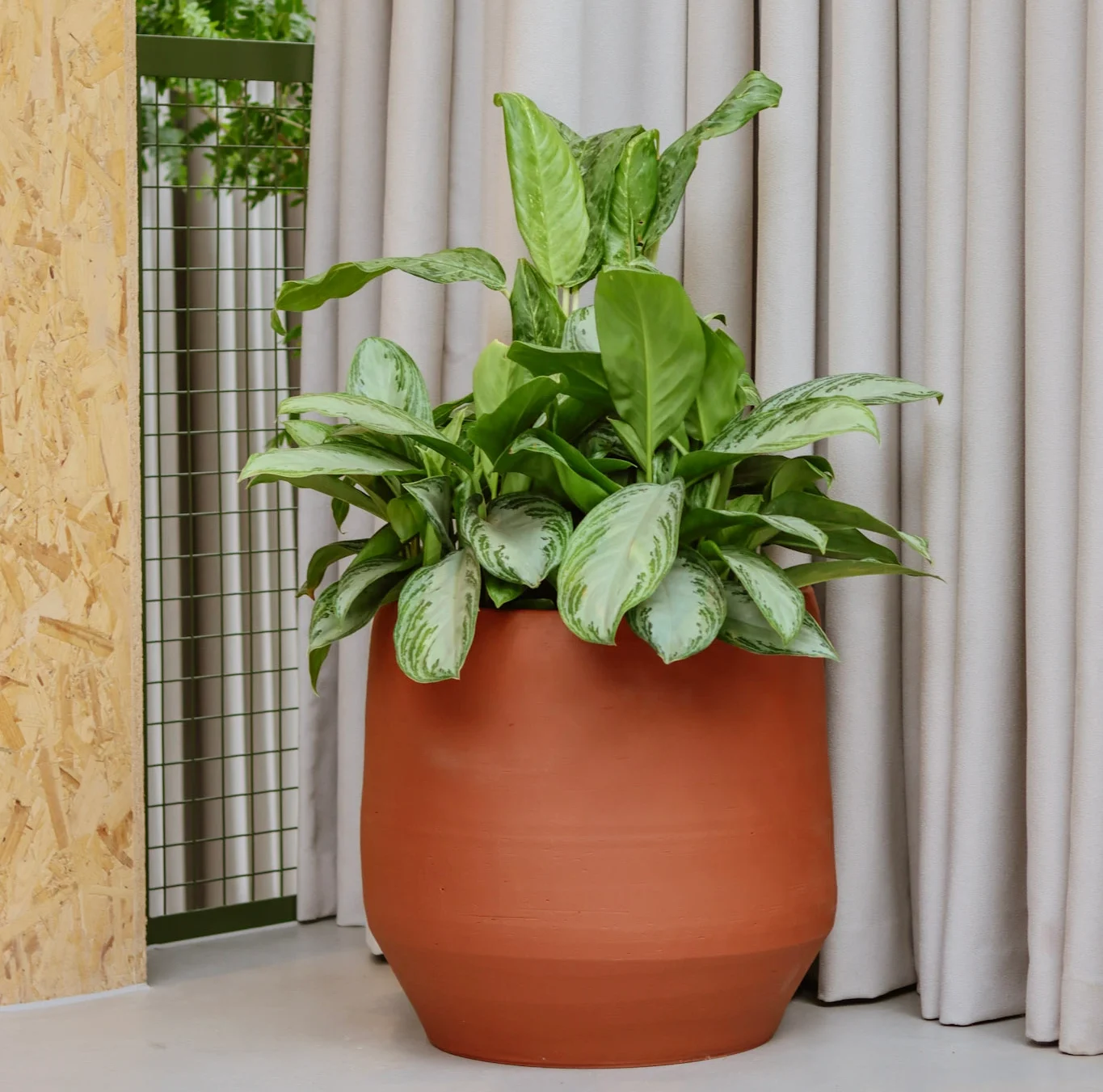
How to care for Aglaonema (Chinese Evergreen)
A beautiful ornamental plant that tolerates low light and can be planted with other species to create a varied display.
- Light: Tolerates low light.
- Water: Water when the top 50% of soil is dry. Use a pot with drainage holes to prevent root rot.
- Maintenance: Remove dead or yellowing leaves. Dust leaves with a damp cloth to aid photosynthesis. Repot every 2-3 years, or when roots show, into a pot one size larger.
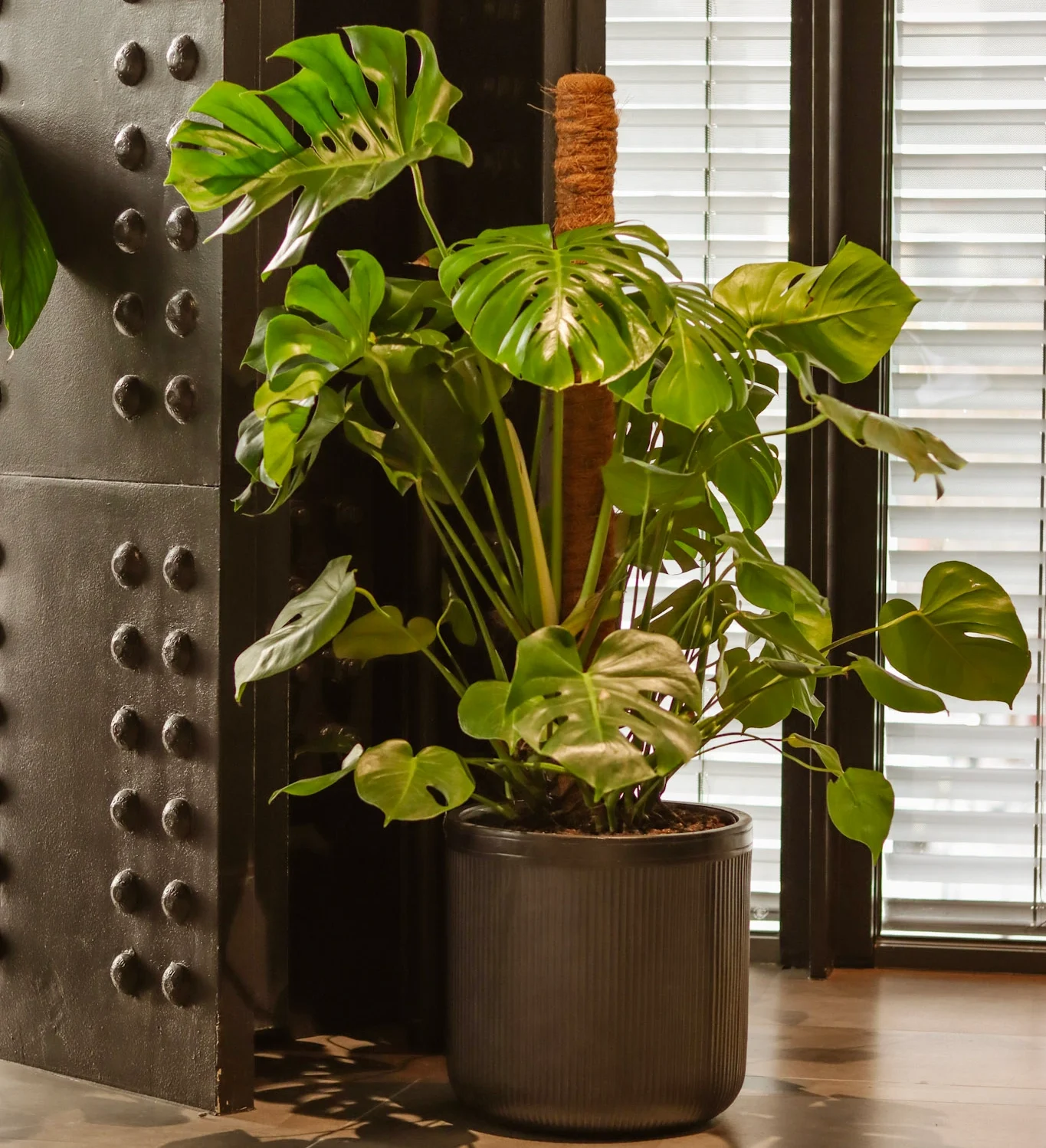
How to care for Monstera (Swiss Cheese Plant)
Their stunning signature leaves provide a large surface area to help absorb noise.
- Light: Prefers bright, indirect light. Avoid direct sun to prevent leaf scorch. Can tolerate low light, but growth will be slower.
- Water: Water when the top 2-4 inches of soil are dry. Use a pot with drainage holes. Yellowing leaves can signal overwatering.
- Maintenance: Prune to control size. Wipe leaves to remove dust. Repot every 1-2 years into a pot 1-2 inches larger. Fertilize monthly in spring and summer.
How to care for Kentia Palm
Elegant tropical fronds that are easy to maintain and resilient, cope well with cooler temps/dry air conditions (ie. UK workplaces)
- Light: Thrives in bright, indirect light. Tolerates low light, but growth slows. Avoid direct sun.
- Water: Keep soil lightly moist, watering when the top 1-2 inches are dry. Use a pot with drainage holes. It’s better to underwater than overwater.
- Maintenance: Prune only completely brown fronds. Dust leaves to aid photosynthesis. Repot every 2-3 years into a pot one size larger. Fertilize sparingly in spring and summer.

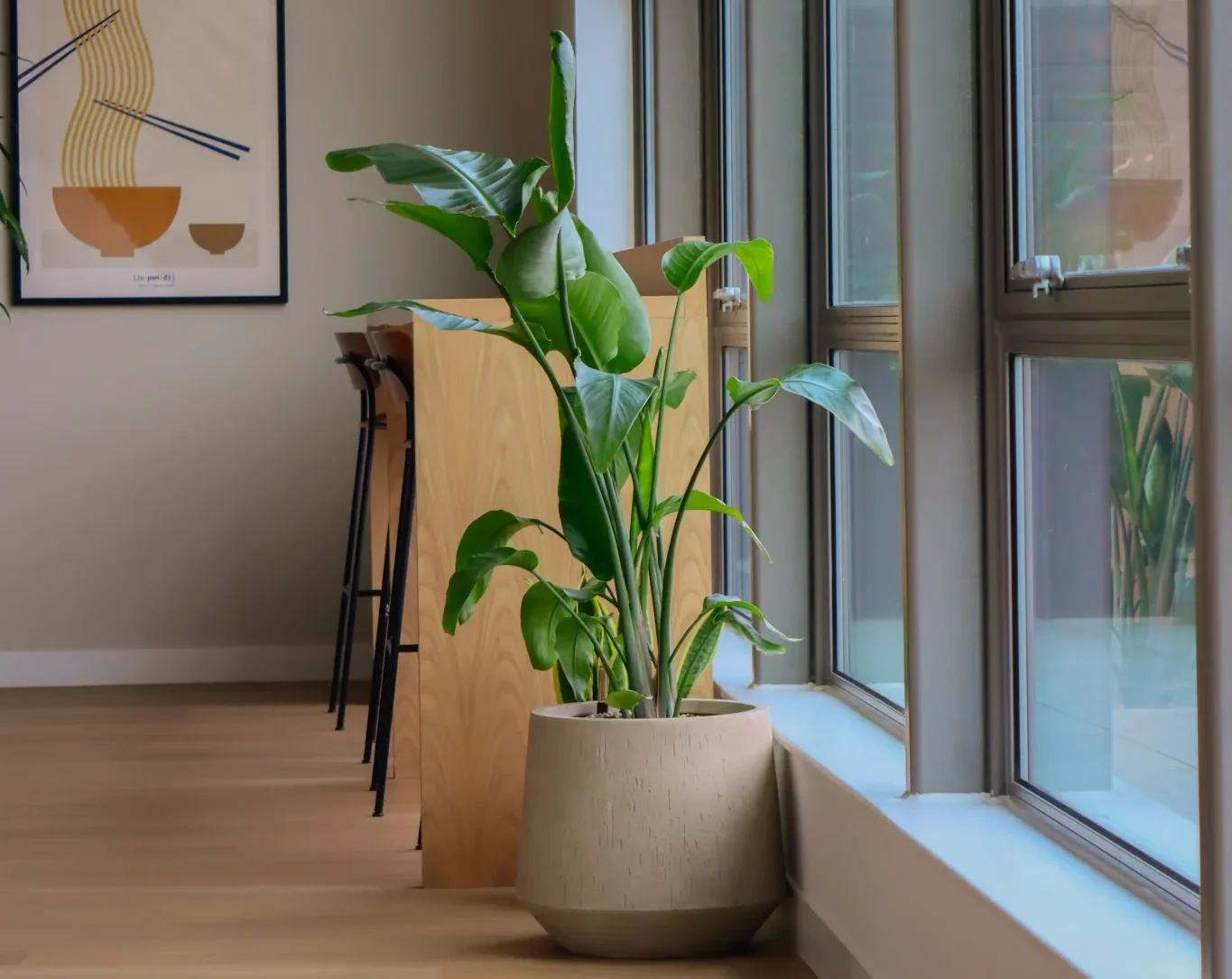
How to care for Strelitzia (Bird of Paradise)
Placed near a window (bright/indirect light) Strelitzia make a beautiful impactful addition.
- Light: Prefers a lot of bright, indirect sunlight. Can handle some direct sun. Avoid low light.
- Water: Keep soil consistently moist but not soggy, letting the top 50% dry out between waterings. Use a pot with drainage holes.
- Maintenance: Leaf splitting is natural. Dust leaves regularly. Prune old or damaged leaves. Repot every 1-2 years into a pot one size larger. Fertilize monthly in spring and summer.
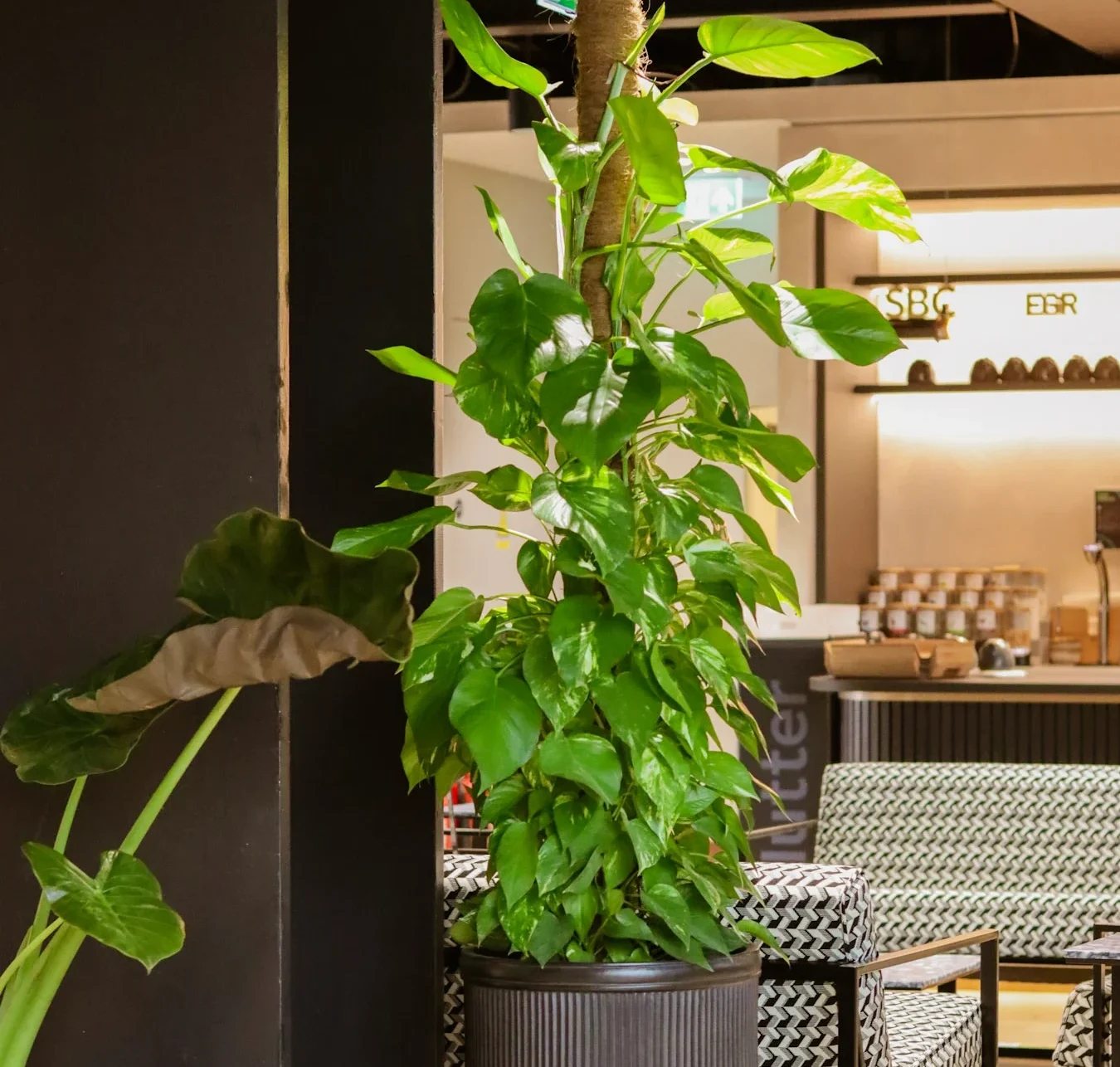
How to care for Epipremnum (Pothos, Scindapsus)
(Scindapsus or Pothos) Very easy to care for and can adapt to lower humidity. Ideal plant for beginners and easy to propagate
- Light: Prefers bright, indirect light to maintain variegation. Tolerates low light, but leaves may turn solid green.
- Water: Water when the top 50-75% of the soil is dry. Use a pot with drainage holes.
- Maintenance: Prune to encourage a fuller plant; cuttings can be propagated in water. Repot every 1-2 years. Dust leaves to aid photosynthesis. Fertilize sparingly in spring and summer.

How to care for Sansevieria (Snake Plant, Mother-in-Law’s Tongue)
Very robust, hardy architectural plant, can cope with a shady corner and thrives on neglect – the ideal plant for beginners and busy people!
- Light: Thrives in bright, indirect light but is highly tolerant of low light. Can handle some direct sun.
- Water: Water only when the soil is completely dry. Overwatering is the most common cause of death. Water less in winter.
- Maintenance: Dust leaves occasionally. Prune damaged leaves at the soil line. Repot every few years, only when the plant is root-bound.
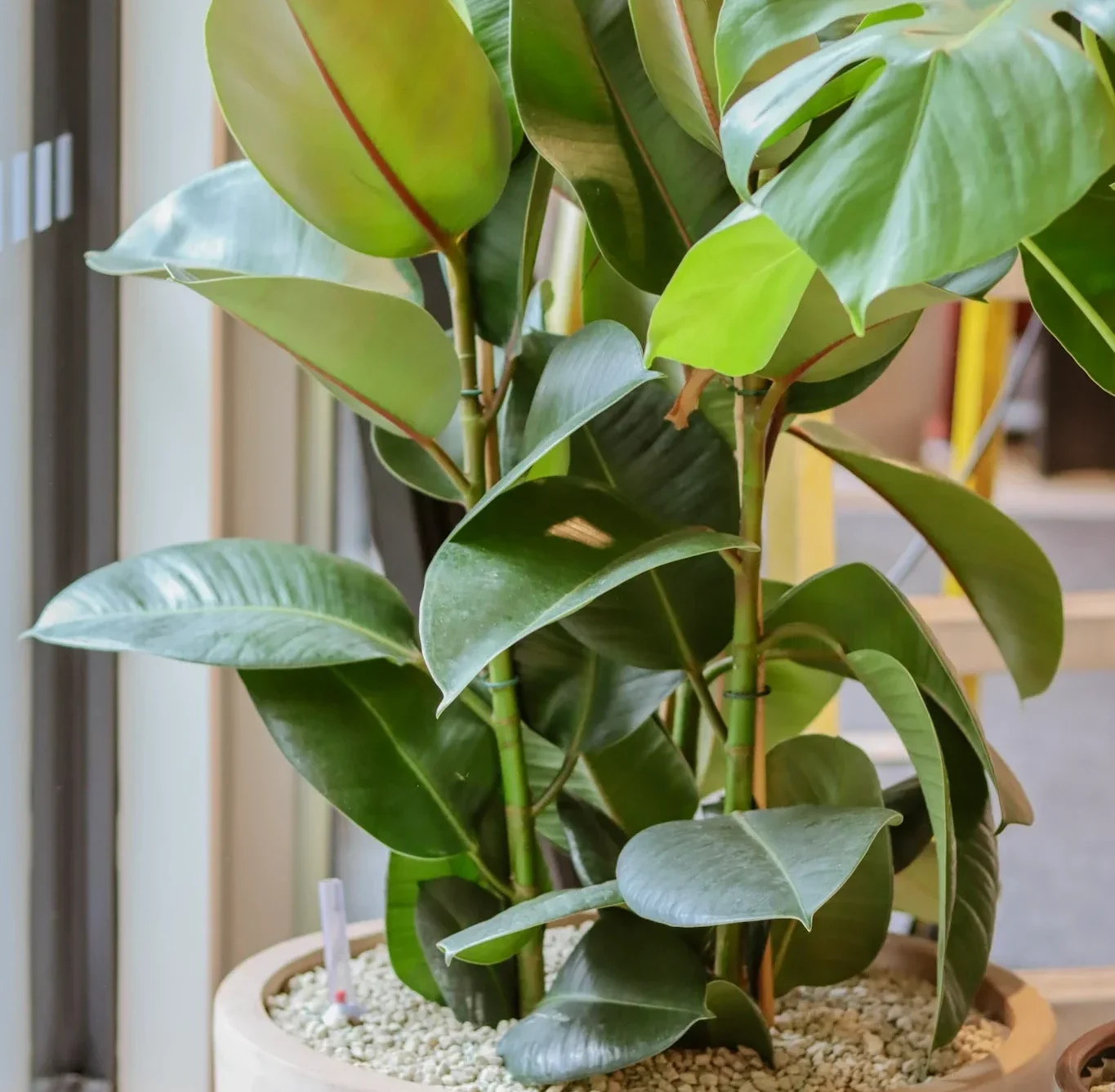
How to care for Ficus (Rubber Plant)
Attractive foliage and this plant can tolerate dry spells and will grow happily under office strip lighting (providing they are on for 8 hours+).
- Light: Prefers bright, indirect light. Avoid direct sun, which can scorch leaves.
- Water: Water when the top 2-3 inches of soil are dry, keeping it moist but not soggy. Use a pot with drainage holes. Water less in winter.
- Maintenance: Wipe leaves to remove dust. Prune to control size and shape. Repot every 1-2 years into a pot one size larger. Fertilize monthly in spring and summer.